Why the IMF Is Warning About Budget Deficits Not Seen Since Covid
ALT: IMF warning about rising global budget deficits not seen since the Covid pandemic era
For educational purposes only. Not investment advice.
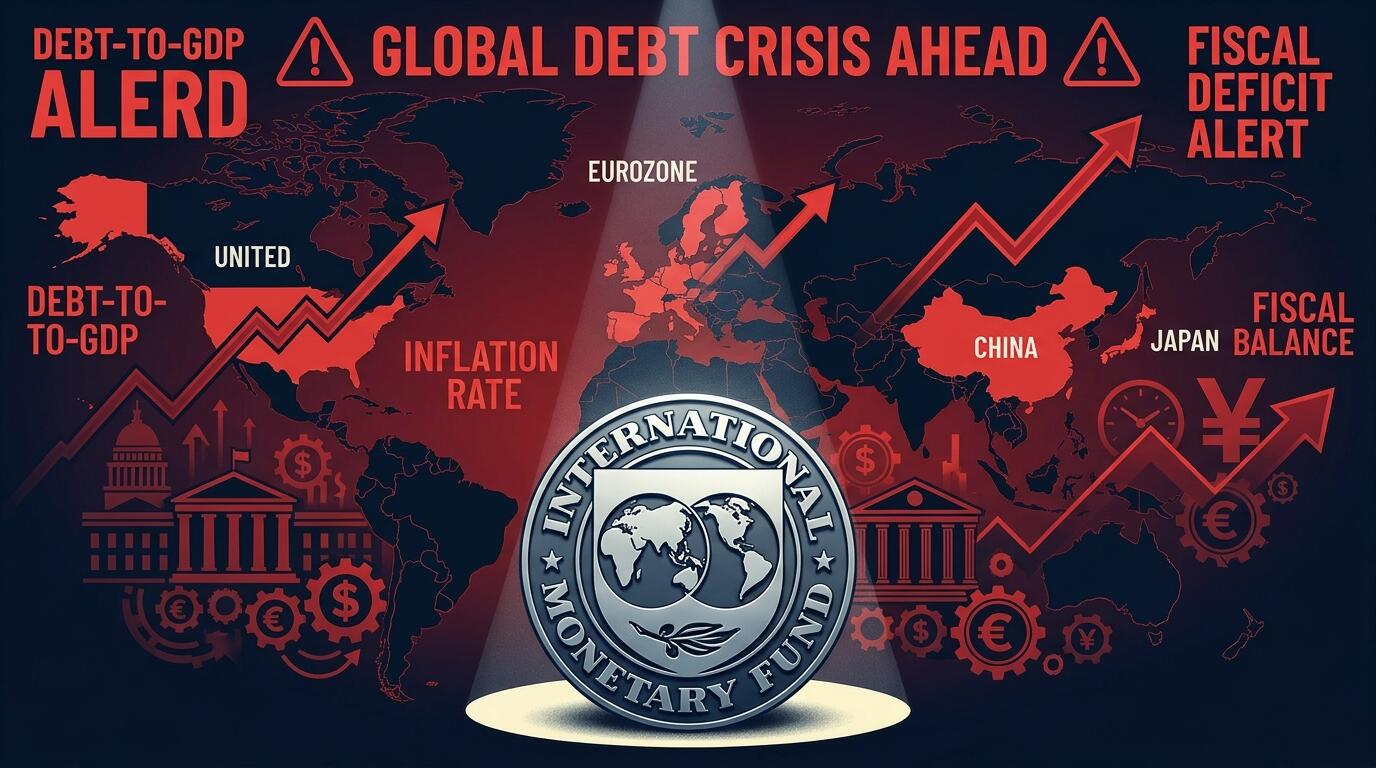
ALT: IMF warning about rising global budget deficits not seen since the Covid pandemic era
The IMF's Deficit Warning: Why the World's Financial Watchdog Is Sounding the Alarm
The International Monetary Fund is warning that government budget deficits in many of the world's largest economies have climbed to levels not seen since the height of the Covid-19 pandemic — and that the window for action is narrowing. This is not routine caution from a multilateral institution that tends toward measured language. When the IMF raises red flags about fiscal trajectories with this degree of urgency, it signals something genuinely worth understanding. For everyday readers trying to make sense of the headlines, this article breaks down what a budget deficit actually is, why it matters when it gets this large, and what the IMF's warning means for you, your country, and the global economy.
Budget Deficits and the Road Back to Pre-Pandemic Norms
A budget deficit is the gap between what a government spends and what it collects in revenue — primarily through taxes — over a given period. When spending exceeds income, governments borrow to cover the shortfall, typically by issuing bonds. That borrowing adds to the national debt. The concept is not inherently alarming; governments routinely run deficits during economic downturns, wars, or crises to keep services running and stimulate recovery.
What changed dramatically was the scale of pandemic-era deficits. When Covid-19 struck, governments around the world deployed extraordinary fiscal firepower: stimulus checks, business support packages, furlough schemes, healthcare spending, and vaccine rollouts all added up to deficit levels that were historically extreme by peacetime standards. The expectation — shared by most economists and institutions including the IMF — was that once the acute crisis passed, governments would gradually consolidate their finances, reducing the gap between spending and revenue.
That consolidation has not happened the way many expected. According to IMF analysis, public deficits in several major economies have remained stubbornly high or have widened again, driven by a combination of structural spending pressures and political difficulty in making cuts or raising taxes. The result is that fiscal positions in parts of the world look less like a post-pandemic normalization and more like a continuation of the crisis mode that governments entered in 2020.
The IMF's Fiscal Monitor — the institution's flagship publication tracking public finances around the world — has repeatedly flagged this trend. What makes the current situation particularly notable is that the deficits are persisting during a period of relatively strong economic activity in some regions, meaning governments are not running large deficits because their economies are in freefall. They are running them in conditions where consolidation should, in theory, be more achievable.
ALT: Chart illustrating government budget deficit levels compared across pre-pandemic, Covid-era, and current fiscal periods for major economies
Why Deficits Are Widening Again: The Mechanisms Behind the Numbers
The IMF's concern is not simply that deficits exist — it is about why they are widening, what is driving them, and why those drivers are likely to persist. Understanding the underlying machinery helps explain why this is a structural problem rather than a temporary blip.
The Legacy of Pandemic Spending
Governments that borrowed heavily during the pandemic now carry significantly larger debt loads than they did before 2020. Servicing that debt — paying interest — consumes a growing share of public revenues. Debt servicing costs are the annual interest payments a government must make on its outstanding borrowings. When interest rates rise, those costs increase on newly issued debt and on any existing debt that matures and must be refinanced at higher rates. The sharp increase in interest rates seen in many countries in recent years — a deliberate policy response to elevated inflation — has made this dynamic considerably more expensive for public treasuries. Higher debt-servicing costs mean less money available for other priorities, or alternatively, even larger deficits if governments maintain existing spending levels.
Structural Spending Pressures That Are Not Going Away
Several long-term spending pressures are colliding simultaneously in many countries. Aging populations increase the cost of public pension systems and healthcare. In countries where the ratio of working-age taxpayers to retirees is declining, this creates a mathematically difficult situation: revenues grow more slowly while mandatory expenditure grows faster. The IMF has consistently highlighted demographic trends as a central fiscal risk for advanced economies and many emerging markets.
Defence spending is another factor. Geopolitical tensions — particularly following Russia's invasion of Ukraine — have prompted a meaningful number of countries to increase their defence budgets, often significantly. These increases layer on top of existing fiscal pressures rather than replacing anything, widening the spending side of the ledger without corresponding revenue growth.
Climate-related expenditure is also becoming a material budget item. Governments are under pressure to invest in energy transition, infrastructure resilience, and disaster response. These are not optional line items in the long run — they represent genuine fiscal commitments that were not priced into budget frameworks a decade ago.
Political Constraints on Consolidation
Fiscal consolidation — the process of reducing a deficit through a combination of spending cuts and revenue increases — is economically straightforward to describe but politically difficult to execute. Spending cuts affect real constituents: pensioners, healthcare recipients, public sector workers. Tax increases face organized resistance from businesses and high earners. In democracies with regular election cycles, the incentive structure for politicians tends to favor short-term spending over long-term balance-sheet health.
A pattern we consistently observe in the coverage of fiscal policy is that consolidation plans announced by governments frequently get deferred, watered down, or quietly abandoned when economic growth softens or when elections approach. The IMF has noted that fiscal forecasts made by governments themselves tend to be optimistic — projecting more consolidation than ultimately materializes.
The Revenue Side: A Quieter Problem
Much of the deficit discussion focuses on spending, but revenue shortfalls are equally important. Tax revenues as a share of economic output can fall during economic slowdowns, when corporate profits decline and income tax receipts drop. In some economies, structural changes — including the growth of informal work arrangements, digital commerce crossing jurisdictions, and declining labor shares of income — have made it harder for governments to collect revenue at the levels their spending plans assume.
Evidence and Competing Views on How Serious This Really Is
The IMF's warning has not gone unchallenged, and the debate among economists about fiscal sustainability is genuinely nuanced. Understanding the different perspectives helps readers assess the risks more clearly.
Mainstream institutional concern, represented by the IMF and similarly by the World Bank and many central banks, holds that high debt-to-GDP ratios and persistent deficits constrain governments' ability to respond to future crises, push up borrowing costs for the private sector by competing for available capital, and can — in extreme cases — trigger debt crises if creditor confidence collapses. The IMF's Managing Director has publicly urged governments to act now rather than waiting until markets force their hand, a message amplified in a widely circulated address to finance ministers and central bankers.
The heterodox view, associated with economists who argue that sovereign governments with control over their own currency face fewer constraints than the IMF framework suggests, holds that deficit concerns are often overstated. Proponents argue that as long as inflation remains controlled and the economy is operating below full capacity, deficits can be sustained or even expanded productively. This perspective gained adherents during the post-2008 period when predictions of inflation and market panic from large deficits did not materialize in the expected timeframe.
The market-based view focuses less on abstract ratios and more on what bond markets are signaling. When investors demand higher yields to hold a government's debt, that is a concrete signal of rising risk perception. Some economies have experienced exactly this, with borrowing costs rising not just due to central bank policy but due to concerns about fiscal trajectories.
Perspective — Strengths — Trade-offs — Best Fit
IMF / institutional concern — Grounded in historical precedent; flags tail risks early — Can be overly conservative; has sometimes overestimated crisis risks — Governments with high debt-to-GDP ratios and limited monetary flexibility
Heterodox / expansionary view — Highlights real productive uses of deficit spending; avoids unnecessary austerity — Inflation risk; less applicable to countries that cannot issue debt in their own currency — Large advanced economies with reserve-currency status and low inflation
Market-signal view — Anchored in real-time investor behavior; self-correcting mechanism — Markets can be slow to reprice risk, then move abruptly — Emerging-market economies most exposed to sudden capital-flow reversals
The honest answer is that the appropriate level of concern depends significantly on which country is under discussion. The United States, the European Union, Japan, and a lower-income emerging-market economy with dollar-denominated debt face very different risk profiles even if their headline deficit numbers look similar.
What This Means for Ordinary People and Where Things May Be Heading
The IMF's fiscal warning has practical implications that extend well beyond government balance sheets. The most direct channel is through interest rates. When governments borrow heavily, they compete with businesses and households for available funds in credit markets. This upward pressure on borrowing costs can translate into higher mortgage rates, more expensive business loans, and costlier credit card debt — even in countries where central banks have begun cutting their policy rates.
For people thinking about long-term financial planning, persistent deficits also raise questions about the future shape of public services. If governments are eventually forced to consolidate — whether by choice or by market pressure — the adjustment could involve changes to pension eligibility ages, healthcare coverage, or other public benefits. The IMF has specifically highlighted the need for many countries to reform entitlement spending to put finances on a sustainable path.
What the IMF is urging governments to do can be summarized in plain terms: start the consolidation process now, while conditions allow for gradual adjustment, rather than waiting until a crisis forces abrupt and more painful cuts. The institution has noted that the cost of waiting compounds over time — both because debt accumulates and because the credibility of fiscal commitments erodes when promises of consolidation are repeatedly deferred.
For readers trying to make sense of these developments, a few practical takeaways are worth keeping in mind. Government fiscal decisions — tax policy, spending levels, benefit structures — have long time horizons, and the choices made (or deferred) today shape economic conditions for years to come. Staying informed about these trends is genuinely useful, even if it feels abstract. Understanding whether your government is on a credible fiscal path is relevant to how you think about everything from the stability of your pension to the interest rate on your next loan.
How does a government budget deficit affect everyday people?
A government budget deficit affects everyday people primarily through its influence on interest rates, public services, and long-term economic stability. When governments borrow heavily, it can push up the cost of credit across the economy, making mortgages, car loans, and business financing more expensive. Over time, large deficits can also pressure governments to reduce spending on public services — including healthcare, education, and pensions — or to raise taxes to restore fiscal balance.
Are all budget deficits equally dangerous for an economy?
Not all budget deficits carry the same risk. A country that borrows in its own currency and has strong economic fundamentals can typically sustain larger deficits for longer than a country with dollar-denominated debt and weaker growth prospects. Context matters: a deficit incurred during a severe recession or crisis is generally viewed differently from one that persists during a period of solid economic growth. The IMF's concern is specifically about deficits that remain elevated when conditions should allow for consolidation.
How long could it take for governments to reduce deficits to safer levels?
The timeline for fiscal consolidation varies widely depending on a country's starting point, political will, and economic conditions. The IMF generally advocates for gradual, credible consolidation spread over multiple years rather than sharp austerity measures, which can damage growth and become self-defeating. Some countries have achieved meaningful deficit reduction over a period of several years through a mix of spending restraint and revenue measures — but the process requires consistent policy commitment across election cycles, which has historically proven difficult in many democracies.
Wrapping Up
The IMF's warning about budget deficits reaching levels comparable to the Covid-19 emergency period is a story about the gap between what governments promised during the crisis and what has actually happened since. Three core points emerge from a clear-eyed look at the situation.
First, the deficits that widened dramatically during the pandemic have not normalized as expected, and the structural forces keeping them elevated — aging populations, higher debt-servicing costs, defence and climate spending, and political difficulty with consolidation — are not going away on their own.
Second, the risk is not the same everywhere. Countries with strong institutions, reserve-currency status, and credible fiscal frameworks face different pressures than those with more fragile fiscal positions. Understanding where your own country sits on that spectrum is worth doing.
Third, the IMF's message is essentially one of urgency and timing: gradual, planned consolidation now is far preferable to forced, abrupt adjustment later. The institution's track record suggests it does not issue this kind of warning casually.
For readers who want to stay ahead of how these fiscal trends unfold — and what they mean for markets, interest rates, and personal finance — the most valuable thing you can do is build a habit of following economic news without being overwhelmed by the jargon. That is exactly the kind of financial literacy that turns confusing headlines into genuinely useful knowledge.
Want to make sense of today's financial headlines without the jargon? Visit Vega Brief for plain-English breakdowns of the latest economic, market, and personal finance news — all explained clearly, sourced transparently, and strictly for educational purposes.
Sources
International Monetary Fund. "IMF / Fiscal Monitor Press Briefing".
http://mediacenter.imf.org/news/imf---fiscal-monitor-press-briefing/s/1e2b7da4-937a-4aa1-a3f8-52c83290d049
YouTube / IMF. "IMF Chief Warns Governments to Act Now on Record Debt".
https://www.youtube.com/watch?v=Q_f-xu8mSTE
International Monetary Fund — Official Website.
https://www.imf.org/
Note: Fiscal data and institutional guidance evolve over time. Readers are encouraged to check the latest official publications from the IMF and their own government's treasury or finance ministry for the most current information.
For educational purposes only. Not investment advice. We do not recommend any stock, fund, broker or trading platform. Headlines are sourced from Google News · Business; every story links to the original publishers.