How to Build an Emergency Fund When Inflation Is Rising
ALT: Person saving money in a jar while reviewing budget during high inflation economic environment
For educational purposes only. Not investment advice.
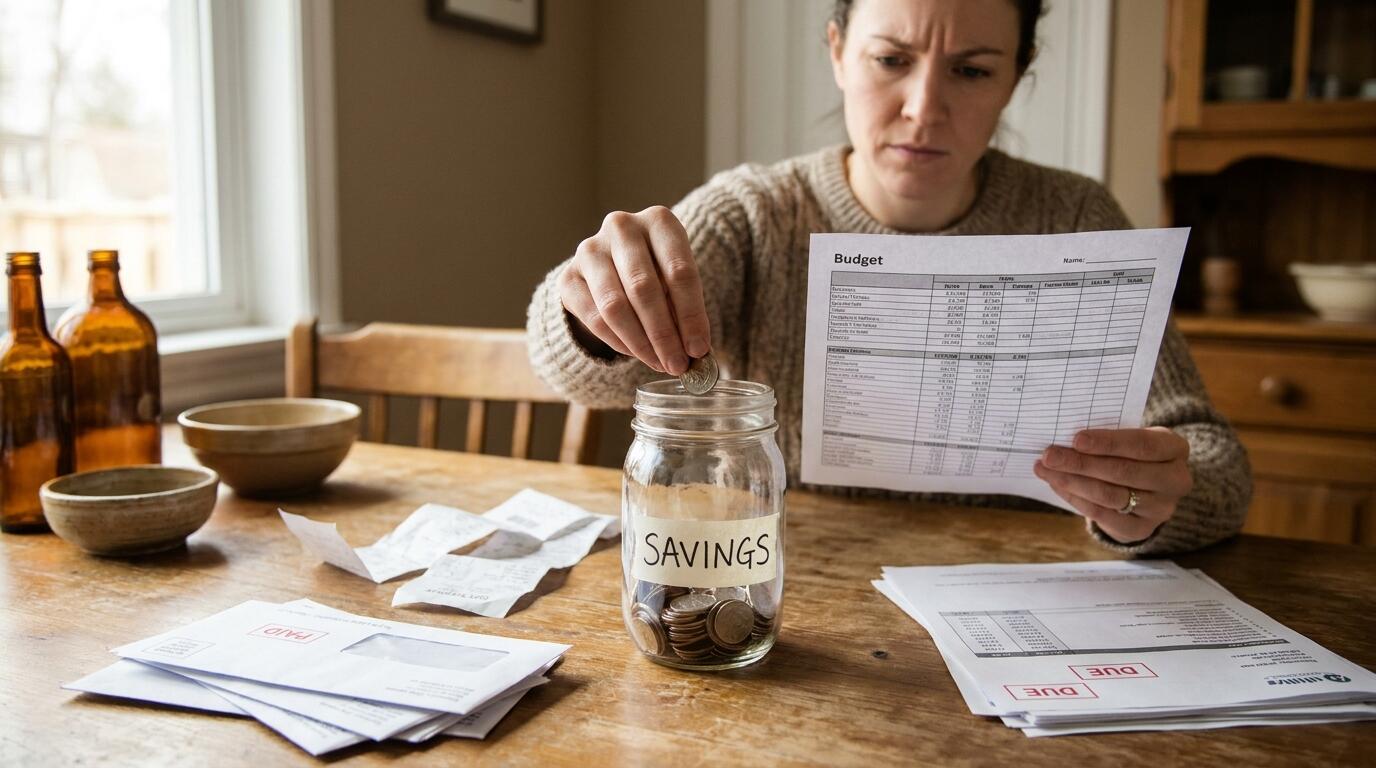
ALT: Person saving money in a jar while reviewing budget during high inflation economic environment
Building an Emergency Fund That Keeps Pace With Inflation
Can you really save for emergencies when the cost of everything keeps going up? Yes — and doing so is more urgent than ever. This guide walks you through exactly how to build, size, and maintain an emergency fund in an inflationary environment, so that when an unexpected expense hits, you have real purchasing power in reserve — not just a number on a screen.
Inflation is the sustained rise in the general price level of goods and services over time, and when it accelerates, it quietly erodes the value of money sitting idle. This guide is for anyone who has been putting off starting an emergency fund because rising prices feel like they leave nothing left to save — and for those who already have one but worry it may no longer be large enough to cover what it once would.
What You Need Before You Start: Setting the Foundation for Smarter Saving
Building an emergency fund during a period of rising prices requires some groundwork before you contribute your first dollar. Rushing in without a clear picture of your finances often leads to either under-saving or pulling from the fund too soon, which defeats its purpose.
An emergency fund is a dedicated cash reserve held specifically for unplanned expenses — a job loss, a medical bill, a car breakdown — that would otherwise force you to take on high-interest debt. The key word is "dedicated." This is not a checking account you dip into freely; it is a financial buffer.
Before you begin, you need a realistic snapshot of three things: your current monthly expenses, your income stability, and your existing debt obligations. You do not need specialized financial software for this. A spreadsheet or even a handwritten list works fine. What matters is accuracy, not sophistication.
Time and effort required are modest at first but consistent over the long term. The setup phase — calculating your target, choosing an account, and automating contributions — can typically be completed in a single focused session. The real commitment is the ongoing discipline of contributing regularly, even when inflation makes that feel difficult.
Checklist before starting:
A clear monthly expense total, including rent or mortgage, groceries, utilities, transportation, insurance, and minimum debt payments
An understanding of your income: is it steady (salaried) or variable (freelance, hourly, seasonal)?
A separate savings account that is distinct from your everyday spending account
A rough sense of your current financial obligations and any high-interest debt you are carrying
Honest awareness of your spending habits and where you have flexibility
A commitment to treating emergency fund contributions as a fixed expense, not an afterthought
Step 1: Calculate How Much You Actually Need in Today's Prices
The first step is determining your inflation-adjusted savings target. A standard personal finance guideline, cited by the U.S. Consumer Financial Protection Bureau (CFPB), recommends holding three to six months of essential living expenses in an emergency fund. However, this figure was established in more stable price environments.
When inflation is elevated, "three months of expenses" means more in dollar terms than it did a year or two ago. Pull up your actual monthly spending — not what you budgeted, but what you genuinely spent — and use that current figure as your baseline. If your monthly essentials have risen meaningfully compared to last year, your target number should reflect that reality.
As a general rule, lean toward the higher end of the range if your income is variable or comes from a single source, if you work in a volatile industry, or if you have dependents. A six-month cushion provides significantly more security in uncertain economic conditions than three months does.
Tip: Recalculate your target at least once a year. Because inflation changes the cost of your essentials, a fund that was fully adequate eighteen months ago may now cover less ground than you think.
Step 2: Open the Right Type of Account for Your Emergency Reserve
Where you hold your emergency fund matters, especially when inflation is eating into returns. The goal is to find an account that is safe, accessible within days, and earning something — rather than sitting entirely idle.
A high-yield savings account (HYSA) is a deposit account offered by banks or credit unions that pays a meaningfully higher interest rate than a standard savings account, while still keeping your money federally insured up to applicable limits under the Federal Deposit Insurance Corporation (FDIC) for banks, or the National Credit Union Administration (NCUA) for credit unions. These accounts are not investments — your principal does not fluctuate — but they do help offset some of the erosion that inflation causes to idle cash.
Understanding how the Federal Reserve's rate decisions shape deposit account yields is useful context here. When the Fed raises its benchmark interest rate, banks tend to pass higher yields onto deposit accounts — including HYSAs. The relationship between Federal Reserve rate decisions and your savings directly affects what your emergency fund earns while it sits in reserve.
Avoid locking emergency savings into certificates of deposit (CDs) or similar products with early-withdrawal penalties. Accessibility is non-negotiable — an emergency fund you cannot reach quickly is not serving its purpose.
Tip: Compare rates across multiple institutions, including online banks, which often offer more competitive rates than traditional brick-and-mortar branches. Confirm that the institution is FDIC- or NCUA-insured before opening any account.
Step 3: Reframe Your Budget Around Inflation-Adjusted Priorities
Before you can consistently save, you need a budget that acknowledges higher prices without pretending they will reverse quickly. Many people in our experience of covering personal finance patterns make the mistake of using last year's grocery or utility numbers when planning this year's contributions. That leads to persistent shortfalls.
Go through your current spending in two categories: fixed expenses (rent, loan payments, insurance) and variable expenses (food, subscriptions, entertainment, clothing). Inflation tends to hit variable expenses — particularly groceries and energy — the hardest. Identify which variable expenses have genuinely increased and which you have some control over.
The goal is not to strip your life bare. It is to find a realistic monthly savings amount that you can sustain, even if it starts small. A consistent smaller contribution made every month is more effective at building a buffer than an ambitious plan you abandon after two months.
Tip: If inflation has genuinely squeezed your discretionary spending down to nearly nothing, prioritize even a token regular contribution over zero. The habit and the account structure matter as much as the immediate dollar amount.
Step 4: Automate Contributions So Consistency Isn't Optional
Automation is the single most effective behavioral tool for building any savings habit, and it is especially powerful when day-to-day spending pressures make it easy to rationalize skipping a deposit.
Set up an automatic transfer from your checking account to your emergency fund account on the same day your paycheck arrives — or as close to that as possible. This "pay yourself first" principle, long advocated by financial educators and formalized in U.S. policy discussions around savings behavior, removes the decision from your hands. The money moves before you have the chance to spend it.
If your income is variable — meaning it fluctuates from month to month — automate a base contribution that represents a conservative floor amount, then manually add extra in higher-income months. The U.S. Federal Deposit Insurance Corporation (FDIC) and financial literacy resources from organizations like the CFPB consistently highlight automation as a key driver of savings success among working adults.
Tip: Even a small automated transfer each pay period accumulates meaningfully over a full year. Review and increase the transfer amount whenever your income rises or a fixed expense drops off.
ALT: Diagram showing automated savings transfer strategy for building an emergency fund during inflationary periods
Step 5: Protect the Fund's Real Value Over Time
This step addresses one of the most overlooked dynamics of emergency fund management during inflationary periods: the distinction between nominal and real value. Nominal value is the dollar amount in the account. Real value is what those dollars can actually buy, adjusted for inflation.
If your emergency fund grows at two percent annually but consumer prices are rising at a faster pace, your fund is losing purchasing power even as the balance increases. The CFPB and financial literacy materials from academic institutions consistently note that this gap — between what money earns in a safe account and what inflation takes away — is a core challenge of personal savings management in elevated-inflation environments.
Two practical strategies help here. First, keep your savings target updated as described in Step 1, so you are always saving toward what your current life actually costs. Second, maximize the yield on your emergency savings by choosing a high-yield account and monitoring rates periodically. This does not require moving money frequently — just an annual check to ensure you are not leaving significant yield on the table.
Resist the temptation to move emergency funds into higher-risk assets like stocks or bond funds to chase better returns. Emergency savings must remain stable and liquid. The goal is not to grow wealth; it is to preserve access and purchasing power.
Tip: Think of your emergency fund like insurance, not an investment. Its job is to be there when you need it — not to outperform the market.
Step 6: Establish Clear Rules for When to Use (and Replenish) the Fund
An emergency fund only works if you use it appropriately and rebuild it promptly after a withdrawal. Without clear criteria, it is easy to rationalize drawing from it for non-emergencies — or, conversely, to avoid using it during a genuine crisis and turn to high-interest debt instead.
Define in advance what qualifies as an emergency for your household. Clear qualifying categories typically include: sudden job loss, essential medical or dental expenses not covered by insurance, critical car or home repairs that affect safety or habitability, and urgent travel due to a family crisis. Clear disqualifiers include: planned expenses you forgot to budget for, discretionary purchases, and expenses you can defer without real hardship.
After any withdrawal, treat replenishment as your top savings priority until the fund is restored. Inflation means you may need to replenish to a higher target than the original amount, so revisit the calculation from Step 1 each time you rebuild.
Tip: Write your personal emergency fund rules down somewhere visible. The discipline of having a pre-committed decision framework prevents regret-driven withdrawals in moments of financial stress.
Step 7: Revisit and Rebalance as Economic Conditions Evolve
Economic conditions — including inflation rates, interest rate policy, and the cost of essentials — change, and your emergency fund strategy should evolve with them. A plan built during one macroeconomic environment may need adjustment as that environment shifts.
Check in on your emergency fund at least twice a year. Ask: Has my cost of living changed? Has my income situation changed? Has my target grown because inflation has pushed up my monthly expenses? Have high-yield savings rates moved significantly, making it worth switching accounts?
Current economic conversations around inflation and monetary policy — including discussions about how central bank rate decisions ripple through to savings yields — are directly relevant to this question. Staying informed about these dynamics helps you make better decisions about your own reserve without needing a finance degree.
Tip: Set calendar reminders for your emergency fund reviews so they do not slip through the cracks during busy periods.
Common Mistakes and How to Fix Them
Symptom — Likely Cause — How to Fix
Fund feels like it is shrinking even though you are contributing — Inflation is outpacing your savings rate and your target has not been updated — Recalculate your monthly expense baseline using current prices; adjust target accordingly and seek a higher-yield account
You keep dipping into the fund for non-emergencies — No clear rules for what qualifies as an emergency — Write explicit criteria for valid withdrawals; create a separate small "buffer" account for irregular planned expenses
You cannot find anything to contribute after paying bills — Budget has not been adjusted to reflect inflation-era spending — Do a line-by-line review of variable expenses; find even a small consistent amount and automate it
Emergency fund is in a standard savings account earning near-zero interest — Default banking inertia; account opened before high-yield options were widely available — Research FDIC-insured high-yield savings accounts; transfer the balance to one with a meaningfully better rate
You rebuilt the fund after a withdrawal but to the old, lower target — Did not account for inflation when recalculating the savings goal — Revisit Step 1 and recalculate based on current monthly expenses, not historical ones
Fund feels too small to bother with — Starting from zero feels overwhelming; all-or-nothing thinking — Focus on building the habit and the account structure; even a modest reserve is far better than nothing
Pro Tips for Better Results
Going beyond the basic steps can meaningfully improve how well your emergency fund holds up over time, particularly during extended periods of elevated prices.
Review your emergency fund target alongside your annual benefits enrollment or tax filing. Both events give you a natural reason to reassess your income, expenses, and financial obligations — all of which feed into your target calculation.
Consider separating "short-term emergency" and "extended emergency" savings if your situation allows. A smaller, instantly accessible portion for immediate expenses (think: car repair, one month's rent) paired with a larger portion in a slightly less convenient but higher-yield account can help you earn more without sacrificing accessibility for urgent situations.
Pay attention to how broader economic news affects your personal situation. Discussions about fiscal policy, debt dynamics flagged by institutions like the International Monetary Fund, and the IMF's warnings about budget deficits are not just abstract headlines — they signal the conditions in which your emergency fund will need to perform.
Do not conflate having insurance with having an emergency fund. Insurance is designed to cover large, specific, pre-defined risks. An emergency fund covers the unpredictable gaps: the deductible, the lost income period before a claim pays out, and the situations insurance simply does not address.
A common misconception worth addressing directly: many people believe that once inflation cools, their existing emergency fund automatically "becomes enough again." It rarely does. Prices that rise during inflationary periods typically do not fully reverse. Your cost of living at the peak of inflation often becomes the new normal baseline, which means your emergency fund target should reflect where prices have landed — not where they started.
Q1: How do I figure out the right emergency fund size when my expenses keep changing due to inflation?
The right size for an emergency fund is three to six months of your current essential monthly expenses — and "current" is the operative word. Recalculate based on what you are actually spending today, not what you budgeted last year. The U.S. Consumer Financial Protection Bureau recommends this range as a general guideline; lean toward six months if your income is variable or your job market is uncertain. Revisiting this number annually, or any time your cost of living shifts noticeably, ensures your target stays realistic.
Q2: Is it better to pay off debt or build an emergency fund when inflation is high?
Both matter, and the order depends on the type of debt. High-interest debt — particularly credit card balances — typically carries a rate that outpaces what any savings account pays, making it financially costly to ignore. A pragmatic approach, often suggested by financial educators, is to maintain a small starter emergency reserve (covering one month of essentials) while aggressively paying down high-interest debt, then build the full fund once that debt is cleared. This prevents the cycle of using debt to cover emergencies while trying to save.
Q3: How long does it realistically take to build a fully funded emergency reserve from scratch?
There is no single timeline — it depends entirely on your income, expense level, and how much you can consistently set aside. What matters more than speed is consistency. A pattern consistently observed in personal finance guidance is that people who automate even modest contributions reach their goals more reliably than those who contribute larger but irregular amounts. Treat it as a slow-build project measured in months, not weeks, and revisit your target periodically to account for inflation's effect on what that target should be.
Wrapping Up
Building an emergency fund when inflation is rising is not a contradiction — it is one of the most rational financial moves you can make in a high-price environment. Three core points deserve emphasis as you move forward.
First, your target is a moving number, not a fixed one. Inflation changes the cost of your life, and your savings goal should reflect that honestly. Recalculate regularly using actual current expenses, not historical assumptions.
Second, where you save matters almost as much as how much you save. A high-yield, FDIC-insured savings account is the right home for emergency funds — accessible, safe, and earning more than a standard account, even if it does not fully neutralize inflation.
Third, the habit and the structure are more important than the opening balance. Starting small with a consistent, automated system beats waiting until you feel you can save a larger amount all at once.
Your immediate next step is practical and straightforward: open a dedicated high-yield savings account if you do not already have one, calculate your current inflation-adjusted target using real spending figures, and set up an automated transfer for even a modest amount. Those three actions lay the entire structural foundation, and everything else builds on them from there.
If you want to keep building your understanding of how the broader economy — including inflation, interest rates, and monetary policy — connects to decisions like this one, there is a resource built exactly for that purpose.
Visit Vega Brief for plain-English explainers on the economic stories that matter most — from market moves to personal finance news, all backed by cited sources and written strictly for your education. Bookmark it and turn financial confusion into confident understanding, one story at a time.
Sources & Further Reading
U.S. Consumer Financial Protection Bureau (CFPB). "Emergency Fund: Why You Need One and How to Start Saving".
https://www.consumerfinance.gov
Federal Deposit Insurance Corporation (FDIC). "Savings and Deposit Account Guidance for Consumers".
https://www.fdic.gov
U.S. Bureau of Labor Statistics (BLS). "Consumer Price Index and Inflation Measurement Resources".
https://www.bls.gov
National Credit Union Administration (NCUA). "Share Insurance Fund and Consumer Savings Protections".
https://www.ncua.gov
Note: Standards and regulatory guidance may be updated; please check the latest official documents or consult qualified financial advisors for advice specific to your situation.
For educational purposes only. Not investment advice. We do not recommend any stock, fund, broker or trading platform. Headlines are sourced from Google News · Business; every story links to the original publishers.