What National Disability Employment Awareness Month Means for Local Workplaces
Local news outlets in four states covered how workers and small businesses marked Disability Employment Awareness Month. Here's what the observance is and why it matters for jobs.
For educational purposes only. Not investment advice.
- Local outlets in Pennsylvania, Nevada, Arkansas and Montana covered workers and businesses marking Disability Employment Awareness Month.
- The month is observed each October and is led by the US Department of Labor.
- The Americans with Disabilities Act generally requires covered employers to provide reasonable accommodations.
- The coverage was community-focused, not about new laws or policy changes.
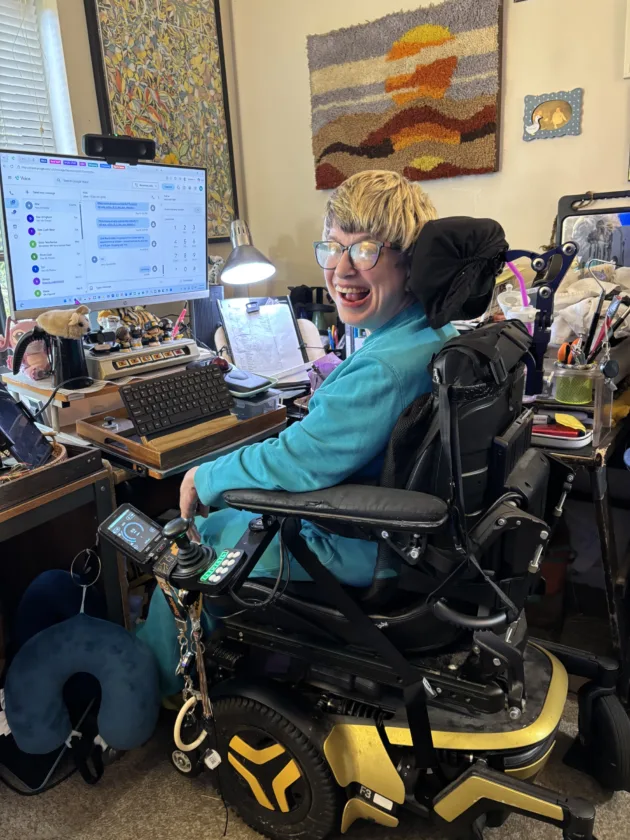
Every October, businesses, nonprofits and government agencies in the US mark National Disability Employment Awareness Month. This year, local news outlets in several parts of the country ran stories about it. Most of them looked at individual workers and small businesses rather than national policy.
Taken together, the coverage gives a small-town, street-level view of a big economic question: how people with disabilities find work, and what employers do to hire and keep them.
What happened
The Lock Haven Express in Pennsylvania ran a profile with the headline "Dru Conroy lives out National Disability Employment Awareness Month." The headline puts one person's working life at the center of the observance. It doesn't give details beyond that.
In Las Vegas, KSNV reported that a local candy store marked the month by training young workers. In Arkansas, KATV reported that a local group marked the month and highlighted a deaf-blind worker. In Montana, KBZK News reported that businesses in Butte celebrated the observance.
The headlines don't include hiring numbers, company names beyond what's described, or policy changes. These are community stories, not reports of new laws or major corporate announcements.
Background: what the month is
As general background, the US Department of Labor's Office of Disability Employment Policy leads National Disability Employment Awareness Month. The observance started in 1945 as a week-long event and was expanded to the full month of October in 1988. Its goal is to recognize the contributions of workers with disabilities and to encourage inclusive hiring.
Another key piece of background is the Americans with Disabilities Act (ADA), a federal law passed in 1990. Among other things, it bars discrimination against qualified job applicants and employees with disabilities. Employers covered by the law generally must provide "reasonable accommodations," meaning changes to the job or workplace that help a person do the work, unless doing so would cause the business significant difficulty or expense.
Accommodations can be simple. They might be a modified schedule, a screen reader, an interpreter, or a rearranged workspace.
How the coverage frames it
The four stories share a pattern. Each one focuses on a local example: a single worker, a single store, a regional group, or a town's business community. Two of the headlines focus on individual workers. The Las Vegas story focuses on training, which suggests an interest in preparing younger people with disabilities to enter the workforce.
None of the headlines presents the subject as a controversy. The tone across outlets is celebratory and community-focused, and there's no sign of the outlets disagreeing.
Why it matters for everyday people
Disability employment is an economic issue as well as a social one. When qualified people are shut out of jobs, they lose income and independence, and employers lose workers they could have hired. That's especially true when businesses say they're having trouble filling positions.
For job seekers with disabilities and their families, local stories like these can point to employers and community groups already doing this work. For small business owners, they show that inclusive hiring isn't limited to large corporations. A candy shop or a group of local businesses can take part too.
For readers who want to learn more, the Department of Labor and state vocational rehabilitation agencies are common starting points for information on rights, training programs and workplace accommodations.
| Publisher | Their angle | Original |
|---|---|---|
| Lock Haven Express | Personal profile of one worker, Dru Conroy | Read ↗ at Lock Haven Express |
| KSNV | Small business training young workers | Read ↗ at KSNV |
| KATV | Advocacy group spotlighting a deaf-blind worker | Read ↗ at KATV |
| KBZK News | Local business community celebrating the month | Read ↗ at KBZK News |
Words to know
- National Disability Employment Awareness Month
- A yearly October observance, led by the US Department of Labor, that recognizes workers with disabilities and promotes inclusive hiring.
- Reasonable accommodation
- A change to a job or workplace, such as adjusted hours or assistive technology, that helps a person with a disability do their work.
- Americans with Disabilities Act (ADA)
- A 1990 federal law that bans discrimination against people with disabilities in areas including employment.
- Vocational rehabilitation
- State-run programs that help people with disabilities prepare for, find and keep jobs.
Questions readers ask
When is National Disability Employment Awareness Month?
It's observed every October in the United States.
Do employers have to make changes for workers with disabilities?
Under the ADA, covered employers generally must provide reasonable accommodations for qualified workers, unless doing so would cause significant difficulty or expense. The details depend on the situation.
Did these stories announce any new rules?
No. Based on the headlines, the coverage highlighted local workers and businesses, not new laws or policies.
For educational purposes only. Not investment advice. We do not recommend any stock, fund, broker or trading platform. Headlines are sourced from Google News · Business; every story links to the original publishers.