Australia's Home Prices Keep Falling as Another Rate Hike Looms
Several major outlets report that Australian home prices dropped again ahead of an expected interest rate rise. Here's what that means and how borrowing costs and housing are linked.
For educational purposes only. Not investment advice.
- Bloomberg, the WSJ, ABC and Reuters all report that Australian home prices fell again in early November 2026.
- The ABC says prices have now fallen for the seventh time and quotes a warning that the 'largest property downturn in 40 years' may be in sight.
- Coverage links the slump to an expected interest rate hike by Australia's central bank, the RBA.
- Reuters reports that Westpac's CEO says some buyers are holding off and waiting for prices to drop further.
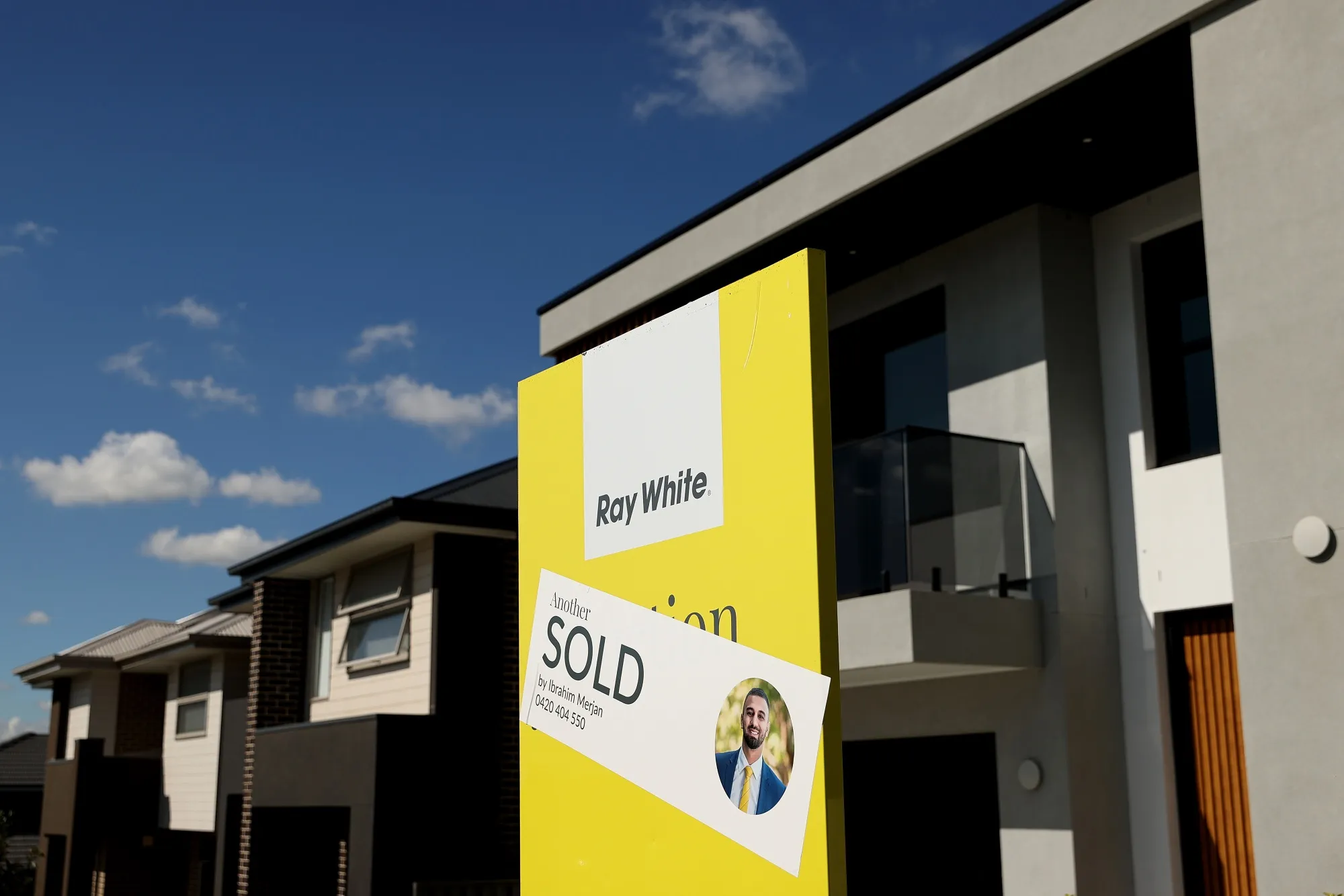
Australia's housing market is going through a rough patch. Several major news outlets reported in early November 2026 that home prices fell again, and that this is happening while the country's central bank looks ready to raise interest rates once more.
For many Australians, a home is their biggest purchase and their largest store of wealth. So when prices fall and borrowing costs rise together, it affects more than just people buying or selling. This explainer covers what was reported and how these forces usually connect.
What happened
Bloomberg reports that Australia's home prices "fall further ahead of expected rate hike." The Wall Street Journal describes it as a deepening "housing slump" while the Reserve Bank of Australia (RBA) "prepares another rate rise." The word "another" means this would not be the first increase.
The Australian Broadcasting Corporation (ABC) says house prices have fallen for the seventh time. Its headline quotes a warning that the "largest property downturn in 40 years" is in sight. That phrase is a warning about where the market could be heading. It does not say a record decline has already happened.
Reuters adds a view from inside the banking industry. It reports that the chief executive of Westpac, one of Australia's biggest banks, says buyers are waiting for lower prices as the downturn deepens.
The headlines don't give exact percentage declines, the size of the expected rate rise, or the date of the next RBA decision, so we don't report those here.
Background: why interest rates move house prices
Most people buy a home with a mortgage, which is a large loan paid back over many years. When the central bank raises its key interest rate, banks usually raise the rates they charge on mortgages too. In Australia, many home loans have variable rates, so existing borrowers often see their repayments go up fairly quickly.
Higher rates also cut how much new buyers can borrow, because banks check whether a borrower could manage the repayments. If buyers can borrow less, they usually can't bid as much, and prices can drift lower.
Central banks normally raise rates to cool inflation, which is the general rise in prices across the economy. Making borrowing more expensive slows spending. Housing is often one of the first parts of the economy to feel it.
The waiting game
The Westpac CEO's comment, as Reuters reports it, describes a common pattern in a falling market. If buyers expect prices to keep dropping, some will hold off to avoid paying more than they need to. Fewer active buyers can mean weaker demand, which can push prices down further.
Sellers face the other side of this. Some may lower their asking price, and others may take their homes off the market and wait. In general, a market where both sides are waiting tends to have fewer sales.
Why it matters for everyday people
Falling prices affect different people in different ways. Homeowners who plan to stay put may see little day-to-day change, apart from higher repayments if their loan has a variable rate. Recent buyers with large loans can be more exposed, because a price drop shrinks the share of the home they actually own.
For people hoping to buy, lower prices can make homes more affordable on paper. But higher interest rates can cancel out some or all of that by making each loan more expensive. How these two forces balance out is different for every household.
The wider economy matters too. When people feel their homes are worth less, they often spend more carefully, and that can spread to shops and other businesses. That chain reaction is part of why central banks watch housing closely.
| Publisher | Their angle | Original |
|---|---|---|
| Bloomberg | Prices falling further ahead of an expected rate hike | Read ↗ at Bloomberg |
| WSJ | Housing slump deepening as the RBA prepares another rise | Read ↗ at WSJ |
| ABC News & Headlines – Australian Broadcasting Corporation | Seventh price fall and a warning of the biggest downturn in 40 years | Read ↗ at ABC News & Headlines – Australian Broadcasting Corporation |
| Reuters | Westpac CEO says buyers are waiting for lower prices | Read ↗ at Reuters |
Words to know
- Reserve Bank of Australia (RBA)
- Australia's central bank. It sets the country's main interest rate to try to keep inflation under control.
- Rate hike
- An increase in the central bank's key interest rate. Higher rates usually make loans, including mortgages, more expensive.
- Variable-rate mortgage
- A home loan whose interest rate can change over time, usually following moves in the central bank's rate.
- Housing downturn
- A period when home prices and sales activity fall instead of rising.
Questions readers ask
Why would a central bank raise rates if it hurts the housing market?
Central banks usually raise rates to bring down inflation. Cooling the housing market is often a side effect of slowing spending across the whole economy, not the main goal.
Does the ABC report mean this is already the worst downturn in 40 years?
No. The ABC headline says the 'largest property downturn in 40 years' is 'in sight,' which is a warning about where things could go. It doesn't say that level has already been reached.
Why does it matter that buyers are waiting?
According to Reuters, Westpac's CEO says buyers are holding off in the hope of lower prices. When fewer people are buying, demand weakens, and that can keep pushing prices down.
For educational purposes only. Not investment advice. We do not recommend any stock, fund, broker or trading platform. Headlines are sourced from Google News · Business; every story links to the original publishers.